The short answer
If your furnace is aging, breaking down often, or heating unevenly, a replacement may make more sense than another repair, but working equipment doesn't have to be replaced just because of new Bay Area rules. We inspect your system and home first, then lay out repair, gas furnace, and heat pump options so you can choose with clear information.
San Jose winters are mild, but the cold, damp nights between late fall and early spring still make a working furnace matter. When your furnace is failing, worn out, or no longer a good fit for your home, FrostPeak AC Repair can help you decide what to do next and then handle the installation. This page covers the signs that point toward a new furnace, what we look at before recommending anything, how to weigh repair against replacement, what affects the cost, and what to expect when we come out to homes in San Jose and nearby cities.
Signs It May Be Time for a New Furnace
Furnaces rarely fail without warning. Most show a pattern of small problems first. In the Santa Clara Valley, where the heating season is short and the system may sit idle for months, some issues only show up on the first cold night of the year. If you notice any of the following, it's worth having the system looked at before you're without heat.
One sign on its own doesn't always mean replacement. Several together, especially on an older unit, usually mean it's time to compare your options.
- Repairs are becoming frequent, or the same part keeps failing
- Some rooms stay cold while others overheat
- The furnace runs longer than it used to but the house still feels cool
- Your gas or electric bills have gone up without a change in how you use heat
- Loud banging, rattling, squealing, or rumbling when the system starts or runs
- A yellow or flickering burner flame instead of a steady blue one
- Visible rust, corrosion, or cracks on the cabinet or heat exchanger area
- More dust, dry air, or stale smells when the heat is on
- The furnace short-cycles, turning on and off in quick bursts
What We Check Before Recommending Anything
A good installation starts with an accurate picture of the home, not just the old unit. We look at how your current system is performing and why, so the next one doesn't inherit the same problems. If a repair is the reasonable answer, we'll tell you.
Here is what a typical evaluation includes:
- The furnace's age, condition, and service history
- Burners, ignition, flame sensor, and blower operation
- The heat exchanger and venting, including signs of corrosion or leaks
- Airflow, filter condition, and return air paths
- Ductwork for leaks, crushed sections, poor insulation, or undersized runs
- Thermostat placement and wiring
- Your home's size, layout, insulation, windows, and which rooms run hot or cold
- Available space, gas line, and electrical capacity, which matter if you're considering a heat pump
Repair or Replace: Your Options
Repair usually makes sense when the furnace is in reasonable shape overall and the problem is a single, contained part such as an igniter, sensor, or blower motor. Replacement starts to make more sense when the unit is older, repairs keep stacking up, the heat exchanger is damaged, or the system was never sized correctly for the house.
If you replace, there are two main paths: a new gas furnace or an electric heat pump, which provides both heating and cooling. Because the South Bay has mild winters and hot summers, especially in inland and southern parts of the valley, a heat pump can cover both seasons with one system. For some homes, a gas furnace is still the more practical fit. We'll walk through the tradeoffs for your specific house.
Bay Area rules are worth knowing before you decide. Under Bay Area Air District Rule 9-4, natural gas furnaces manufactured from 2029 must meet a zero-NOx emission standard, which in practice points homeowners toward heat pumps for furnace replacements after that date. These rules do not require you to replace working equipment. They apply only when an existing furnace fails or is replaced.
On incentives: the federal Energy Efficient Home Improvement Credit (25C) covered qualifying heat pumps placed in service before December 31, 2025, and is not available for new installations after that date. Bay Area homeowners can still check BayREN and their local clean energy provider for current heat pump and electrification incentives. Amounts and availability change by funding cycle, so we confirm the current offer before including it in any quote.
What Affects the Cost of a New Furnace
Every home is different, so we give a written quote after the evaluation rather than a general number. These are the factors that move the cost up or down:
- System type: gas furnace, heat pump, or a hybrid setup
- Equipment size and efficiency level
- Single-stage, two-stage, or variable-speed operation
- Ductwork condition and whether repairs, sealing, or new runs are needed
- Venting changes, gas line work, or electrical panel upgrades
- Location of the unit, such as an attic, crawlspace, closet, or garage, and how easy it is to reach
- Thermostat upgrades or zoning
- Local permits and required inspections
- Removal and disposal of the old equipment
- Any incentives you qualify for at the time of installation
How a Visit Works
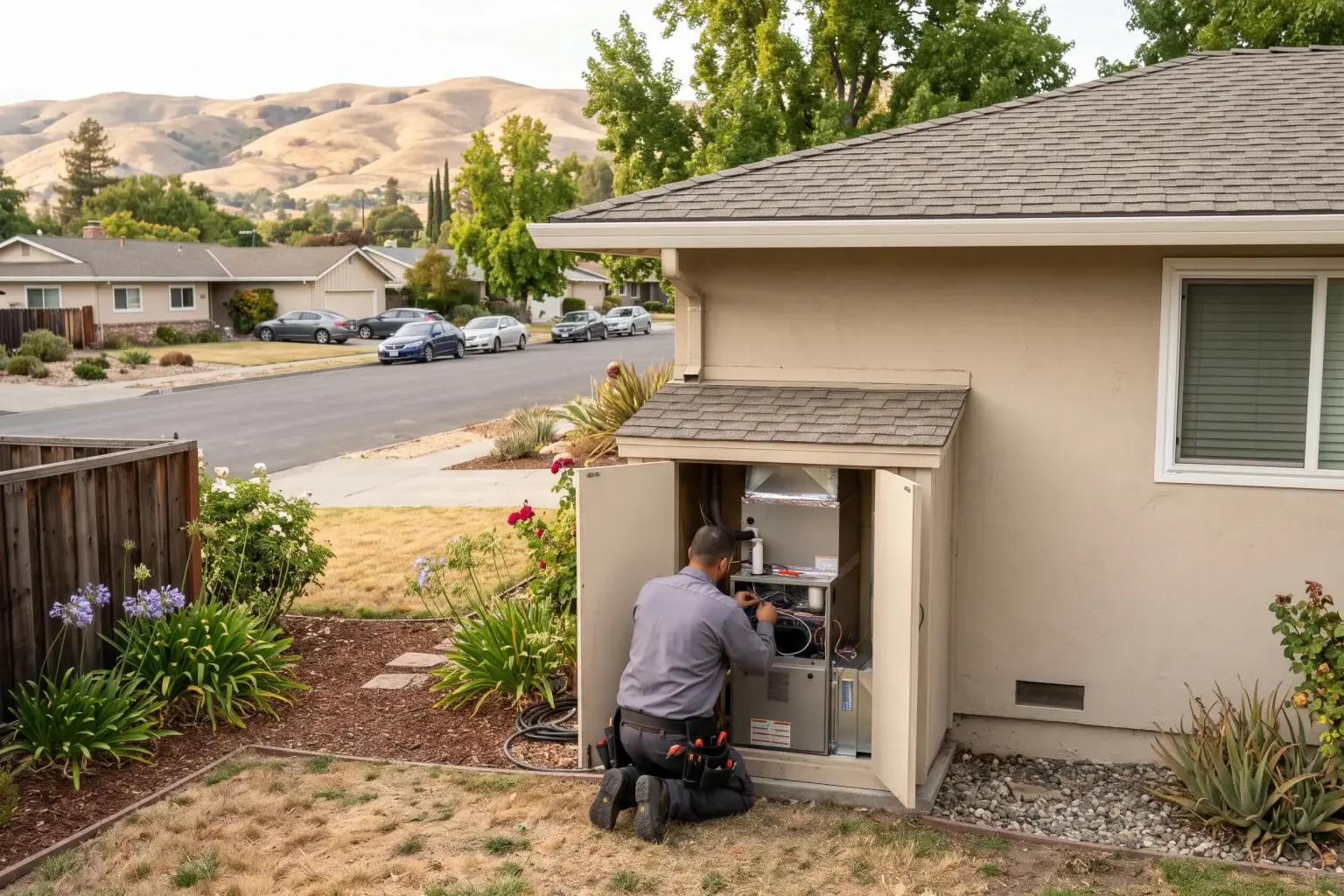
When you contact us, we'll ask a few questions about your current system and what's going on, then schedule a time that works for you. At the visit, a technician inspects the furnace, ductwork, and home as described above and talks with you about comfort issues you've noticed.
Afterward, we explain what we found in plain terms and lay out your options, including repair if it makes sense. You get a written quote for each option so you can compare them side by side. There's no pressure to decide on the spot.
If you move forward, we schedule the installation, handle permits where required, and protect your floors and work areas. Most of the day is spent removing the old unit, installing and connecting the new system, and making any duct or venting changes. Before we leave, we test the system, check airflow and safe operation, clean up, and show you how to use the thermostat and change the filter.